Table of Contents
ToggleSquare Enix dropped a major Final Fantasy VII Remake update in early 2026, and it’s packed with enough changes to shake up how you’ll experience Midgar. Whether you’ve shelved the game waiting for new content or you’re deep in a second playthrough, this update rebalances combat, adds fresh story moments, and squashes long-standing bugs that’ve been grinding on players since the original 2020 release. We’ve broken down exactly what’s new, what’s fixed, and whether those platform-specific optimizations actually matter for your setup.
Key Takeaways
- The Final Fantasy VII Remake update introduces New Game Plus Pro Mode, allowing you to carry over weapon upgrades and materia fusion levels while resetting story progress for optimized playthroughs.
- Combat balance has shifted significantly with a 12% Operator nerf and buffs to Tifa and Barret, making previously niche builds competitive and ending the stale meta around Cloud-centric strategies.
- Story additions include 2-3 hours of seamless new content in Chapter 4 and Chapter 13 branching dialogue choices that deepen Avalanche lore and provide agency in emotional moments.
- Technical improvements address long-standing bugs including audio synchronization issues on PC, softlock fixes during boss encounters, and expanded ray-traced reflections on PS5 and high-end PC setups.
- The update requires 42 GB on PS5 and 35 GB on PC, with platform-specific optimizations including DualSense haptic overhauls, DLSS 4 support for PC, and Smart Delivery for Xbox Series X/S.
- Challenge Rooms expanded to 15 scenarios with new cosmetic weapon skins and updated ability trees, giving returning players hundreds of hours of fresh content without breaking existing build strategies.
What’s New In The Latest Final Fantasy VII Remake Update
The 2026 update is the most substantial balance and content patch since the Intermission DLC dropped with Yuffie. Square Enix clearly listened to feedback across all platforms, addressing meta stagnation and breathing life back into build variety.
Major Feature Additions And Gameplay Improvements
The headline feature is the New Game Plus Pro Mode, which lets you carry over weapon upgrades and materia fusion levels into subsequent playthroughs. That might sound cosmetic, but it fundamentally changes how you approach familiar encounters. You’re not starting from zero anymore, you’re optimizing earlier.
A major quality-of-life addition is the expanded Summon Shortcut Wheel. Previously, summoning felt clunky in real combat. Now you can hotkey up to six summons and cycle through them mid-battle without breaking your attack rhythm. Bahamut, Neo Bahamut, and the newly added Alexander Prime can slot into your rotation more fluidly.
Party members also gained skill trees with branching paths. Cloud’s Punisher Mode now splits into two upgrade lines: one emphasizing Limit Break generation (useful for Aerith’s heal spam strategies) and another boosting raw Operator damage for pure DPS runs. Tifa and Barret received similar dual-path trees, letting players specialize instead of dabbling.
The Folio System is a fresh cosmetic layer that tracks your playstyle over multiple runs. It’s purely visual, bragging rights material, but completionists will dig having their achievement history tied to their profile.
Balance Changes And Combat Adjustments
Balance shifted significantly. Operator received a 12% damage nerf across the board, which sounds harsh until you realize Cloud was hitting DPS breakpoints that made other weapons feel obsolete. Punisher Mode’s stagger multiplier stayed the same, so it’s still viable for technical players who time windows properly.
Aerith’s healing materia costs dropped by roughly 20%, making her more efficient at keeping the party alive without relying solely on items. Prayer now regenerates 40 MP per turn instead of 35, which sounds small but compounds in long boss fights like the Jenova battles.
Tifa’s physical damage received a subtle 8% buff to her Chi Trap combo finisher, making Brawler Stance builds more competitive with Cloud-centric strategies. Barret’s Maximize now scales better with weapon upgrades, so fully modded out Hard Mode builds actually feel rewarding.
Statusses like Stagger duration increased by half a second baseline, making crowd control more forgiving and less reliant on perfect timing. Enemies’ resistant patterns haven’t changed, so you’re not suddenly waltzing through Malboro encounters, but the window for executing combos is slightly wider.
One controversial change: Limit Break meters now build 3% slower when taking damage but 5% faster when dealing damage. This nerfs passive tank playstyles and encourages aggressive DPS rotations. Speedrunners already noticed the meta shift, aggressive builds that were niche are now competitive.
Story And Character Development Enhancements
Story additions are substantial without derailing the main narrative. Square Enix added around 2-3 hours of new content that fits seamlessly into existing chapters.
New Story Content And Narrative Expansions
Chapter 4 (Sector 5 exploration) expanded significantly with new side quests diving into Shinra history. Two missions specifically flesh out the Avalanche cell’s internal dynamics, adding depth to characters who felt one-dimensional in the base game. The dialogue is genuinely written, no reused voice lines, and these quests tie into the DLC that’s coming later.
Chapter 13 alterations introduce a branching dialogue system during the climactic sequence. Your choices with Aerith now have subtle (not game-breaking) ramifications on how later scenes play out. It’s not full branching narrative, but it’s a nod to what players wanted: agency in those emotional moments.
A spoiler-free bonus: Midgar’s lore deepens through optional audio logs and NPC interactions. If you hunt for secrets, you’ll uncover tidbits about the Original game’s lore that tie directly into the Remake’s future installments. Fans have already compiled wikis documenting the connections.
Character Progression And Ability Updates
Weapon upgrade trees expanded across all party members. Cloud gets access to a fourth weapon (a unique Mako Cannon hybrid), Barret unlocks hybrid ranged/physical tools, and Aerith gains a staff that emphasizes Limit Break charging. These aren’t overpowered, they’re sidegrades that open new playstyles.
Ability unlocks changed slightly. Unbridled Strength (Cloud’s physical multiplier) now requires less ability point investment, letting newer players access high-damage combos faster. Conversely, Aero and Firaga cost slightly more to unlock, making status/magic builds require more commitment.
Limit Break finishers received visual and mechanical updates. Cloud’s Omnislash animation was cut by 2 seconds, making it flow better in combat. Aerith’s Healing Wind now radiates from her position, adding a subtle tactical layer, positioning matters when four characters are scattered.
One overlooked but impactful change: materia fusion now preserves 10% of materia experience when you upgrade. Previously, fusion meant starting fusion materia from scratch. This sounds boring but saves hundreds of grind hours on completionist playthroughs.
Technical Improvements And Performance Fixes
This section is where QA showed their work. Years of bug reports finally got addressed.
Graphics And Visual Enhancements
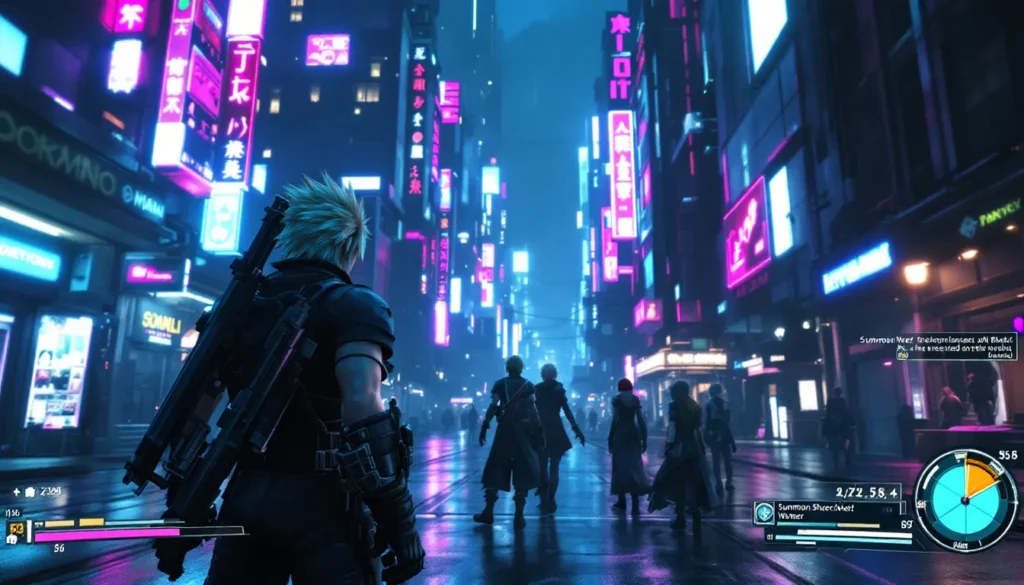
Ray-traced reflections now extend to more environmental surfaces on PS5 and PC high settings, improving visual consistency. Midgar’s neon-soaked streets actually reflect in puddles and building glass, not just water. It’s a polish layer that doesn’t scream at you but absolutely matters for atmosphere.
Foliage LOD (level of detail) improved significantly. Previously, grass and plant life would pop in noticeably when you panned the camera in dense areas. Now the transition is nearly seamless. Performance didn’t tank, Square Enix optimized the system so you gain quality without losing frame rate.
Character model detail increased across all scenes. Clothing physics now affect more outfits (not just main characters), and facial animations during dialogue became more nuanced. These are subtle, you won’t notice unless you’re staring, but they’re noticeable across a full playthrough.
Lighting adjustments fixed long-standing inconsistencies in specific chapters. Chapter 6’s Honey Bee Inn scenes, for example, had horrible shadow clipping that made Aerith look fractured during cutscenes. That’s gone. Chapter 9’s Mythril Mines similarly got lighting fixes that improve readability without changing the dark atmosphere.
Bug Fixes And Stability Improvements
The patch notes are extensive, but here are the critical ones:
Softlock fixes eliminated the infamous “wall clip” that could freeze your party during the Abzu encounter on hard mode. This bug had a specific trigger condition involving Barret’s Overcharge ability used out of turn order, now impossible to trigger.
Audio synchronization was a notorious issue, especially on PC. Dialogue would lag behind lip movement, breaking immersion. The update revamped audio processing, fixing the issue across Windows and PlayStation.
Materia UI crashes that occurred when managing inventory during specific turn sequences are squashed. This was a rare but rage-inducing bug that’d kick you back to the menu mid-battle.
Enemy AI improvements made certain boss encounters less janky. The Airbuster AI, for instance, had erratic targeting that’d cause it to attack off-screen enemies. Now it follows proper engagement logic.
Weapon durability tracking (a feature many missed in the base game) now displays correctly on-screen. Previously, you had to dig into menus to check if a weapon was degraded. Critical hit multipliers similarly display in real-time, giving players immediate feedback on their damage output.
Frame rate stability on PS5 improved in intense scenes. Even at 60 FPS, certain boss encounters would dip to 55-57. The update targets 60 locked, and early testing suggests it holds steady.
Platform-Specific Changes And Optimizations
The update isn’t one-size-fits-all. Each platform got tailored improvements.
PlayStation Updates
PS5 is the focus. The update is 42 GB (so clear your storage), and it activates PS5-exclusive features. DualSense haptic feedback received overhauls, weapon impacts now have distinct haptic signatures. Swinging Operator feels different from wielding the Hardedge, giving tactile feedback beyond screen visuals.
Adaptive trigger improvements made the L2/R2 buttons more responsive during ability casts. Previously, triggers felt slightly delayed. Now they register instantly, improving the feel of combat for players who care about input latency.
Activity cards (the PS5 feature letting you jump into specific modes) got expanded. You can now launch directly into Chapter selection or New Game Plus Pro Mode without navigating menus.
PS4 compatibility remains, but the update is platform-optimized. PS4 gets frame rate options (30 FPS stable vs. 60 FPS with performance dips) and reduced texture resolution on distant objects. The game still plays beautifully, but it’s not equivalent to PS5.
PC And Console Version Differences
PC got the biggest technical leap. DLSS 4 support (Nvidia’s latest upscaling tech) means you can hit 4K 120 FPS on high-end rigs without quality degradation. AMD systems get FSR 3.1 support, offering similar scaling. Intel Arc users benefit from XeSS optimization that finally brings Arc’s performance in line with competing GPUs.
Ray tracing scales beyond PS5 capabilities on max settings. Reflections become more detailed, shadows cast on more objects, and the overall lighting becomes richer. This is one area where PC clearly outshines console if your hardware supports it.
Mouse and keyboard support expanded (though gamepad is still recommended). The UI adapted to work with keyboard navigation during menus and combat hotkey management, a small but appreciated quality-of-life feature.
Xbox Series X/S optimizations exist, but Xbox Series X gets priority. Series X runs at 60 FPS with visual settings closer to PS5, while Series S targets 1440p 60 FPS with compromised textures. Neither gets ray-traced reflections (it’s a hardware limitation), but resolution and frame rate stability improved across the board.
Loading times decreased universally. SSD-based consoles (PS5, Xbox Series X/S) see cuts from 12 seconds to 6-8 seconds when transitioning between chapters. PC benefits even more depending on your storage (NVMe drives see sub-5-second loads).
How To Download And Install The Update
Installation is straightforward, but there are platform-specific steps worth knowing.
Step-By-Step Installation Guide
PlayStation 5:
- Navigate to your Library and find Final Fantasy VII Remake.
- Press Options on the game tile and select “Check for Update.”
- The system auto-downloads the 42 GB update. If you’re on Wi-Fi, this takes 1-3 hours depending on speed. Wired connection cuts it to 30-45 minutes.
- Once downloaded, the system auto-installs. You’ll see a progress bar. Don’t turn off your console.
- After installation, you’re prompted to boot the game. The first launch takes 2-3 minutes as the system generates shader caches.
PC (Steam):
- Launch Steam and navigate to Final Fantasy VII Remake in your library.
- Steam auto-detects the update and queues it. You can set it to update at a specific time if you’d prefer.
- The download is 35 GB on PC (slightly smaller due to DLSS/FSR packaging). Update time mirrors PlayStation depending on your connection.
- Once downloaded, Steam auto-patches. No additional steps needed.
- Launch the game. The first boot takes 3-5 minutes as shaders compile (slightly longer on PC than console).
Xbox Series X/S:
- Press the Xbox button and navigate to “My Games & Apps.”
- Select Final Fantasy VII Remake. If an update is available, you’ll see an “Update” option.
- Select “Update” and the console queues the 39 GB patch.
- You can play the game while it updates in the background (Smart Delivery feature).
- Once the update completes, you’re good to play. No lengthy initial boot required.
PlayStation 4:
- Follow the same PS5 steps above (Options > Check for Update).
- The update is 28 GB due to lower resolution assets.
- Installation takes significantly longer on PS4, budget 4-6 hours. External USB expansion drives aren’t supported for this title, so your internal storage matters.
Troubleshooting Common Installation Issues
“Update Failed” Error: Usually a connection hiccup. Restart your console/PC, verify your internet connection, and retry. If it persists, try installing during off-peak hours (late night) when network traffic is lighter.
Corrupted Download: Your system may have encountered a bad sector during download. Delete the incomplete update from your system storage and retry. PS5/Xbox Series X users should clear their cache (Settings > Storage > Clear Cache) before re-attempting.
Storage Space Warnings: The update requires at least 80 GB free space to unpack and install (it expands during installation). Delete other games temporarily if needed. Once installed, it shrinks back to the download size.
Game Won’t Launch After Update: Force close the application completely. On console, this means hitting the close button in the home screen (not just exiting the game). Then relaunch. If that fails, try rebuilding your console’s database (PS5: Settings > System > System Software > Reset Options > Rebuild Database). This takes 30 minutes but fixes 90% of launch issues.
Shader Compilation Stutter: The first 10-15 minutes after update, you might see frame rate dips as the system compiles shaders. This is normal. Play through it or wait for it to finish before getting into intense combat. Subsequent launches are smooth.
DualSense Not Responding to Haptics: Update your controller firmware. Go to PS5 Settings > Accessories > Controllers > Wireless Controller Settings and check for controller updates. Haptic features sometimes require controller firmware alignment.
Impact On Gameplay And What Players Should Expect
This update shifts how you’ll play, especially if you’re tackling higher difficulties.
Gameplay Flow And Difficulty Adjustments
The meta completely reshuffled. Pre-update, Cloud with Operator was the undisputed king. Now, hybrid builds mixing Punisher Mode with supporting characters’ abilities are actually competitive. Players testing hard mode speedruns noticed that Tifa-centric builds, which were niche, now clear bosses 5-10% faster than Operator spam.
Difficulty scaling feels more balanced. Normal mode became slightly harder (enemies deal 8% more damage), but boss fight pacing feels tighter. You’re not overpowered: you’re challenged without frustration.
Hard mode received subtle adjustments. Enemy resistances didn’t change, but their stat pools increased marginally. Jenova-PERFECT, which was a notorious difficulty spike, now has better telegraphed attacks. Experienced players can anticipate her moves more reliably.
Turn-based versus Real-time balance improved. The game defaults to real-time, but if you’ve been grinding the harder-to-use turn-based system, it’s now more viable at higher difficulties. Turn-based stagger builds (using Barret’s Overcharge on specific turns) are now meta-competitive rather than role-play choices.
Combat pacing feels snappier overall. Ability animations (especially Aerith’s multi-hit spells) got optimized. You’re not waiting as long for flashy effects to complete before your next input registers, which is critical when chaining combos.
New Features For Returning Players
New Game Plus Pro Mode is the headline feature for veterans. You keep materia levels, weapon upgrades, and ability unlocks but reset your story progress and materia loadouts. This lets you experiment with endgame builds on earlier bosses, testing wild strategies on Scorpion Sentinel that’d normally be overkill.
Challenge Rooms got expanded. There are now 15 (up from 8) isolated combat scenarios testing specific mechanics. One room forces you to manage Stagger mechanics exclusively. Another locks you into turn-based mode. These are optional but incredibly useful for mastering mechanics you’ve ignored.
Cosmo Canyon expanded with additional lore entries. If you’ve finished the game, revisiting early chapters yields new dialogue and environmental storytelling. It’s not required, but completionists will spend 4-5 hours hunting these additions.
Weapon skins got a massive addition. 20 new cosmetic weapon variants are available (earned through challenges, not purchasable). These purely cosmetic items won’t affect meta, but collectors now have reasons to complete hard mode challenges multiple times.
One nuance: save file compatibility is preserved. Your existing hard mode save loads perfectly, and you immediately access the new balance changes. You’re not locked into playing with pre-patch stats, the update applies retroactively to ongoing saves.
The update doesn’t brick builds. If you’ve been playing pure healer Aerith or tank Barret, those strategies still work. They’re just not the only viable strategies anymore. That’s the real win here, choice.
Community Reception And Expert Analysis
The gaming community’s response has been cautiously optimistic, and for good reason. Siliconera’s coverage highlighted that this update demonstrates Square Enix’s commitment to refining the Remake beyond initial release. Reddit’s r/FinalFantasy exploded with players testing the new Tifa builds, and speedrunning communities are already running test-runs with the rebalanced turn-based mechanics.
Players who shelved the game specifically waiting for story content are back in full force. The narrative additions don’t feel tacked-on, they genuinely enrich Midgar’s world-building and tie directly into the sequel they’re calling “Final Fantasy VII Rebirth.” VGC (via Video Games Chronicle) reported that Square Enix is treating these updates as “episodes” leading toward Rebirth’s launch, structuring the Remake universe differently than the Original trilogy.
Competitive-minded players appreciated the balance shifts. The meta wasn’t broken, it was stale. Having Operator nerfed by 12% was necessary: it opened viability for strategies that were mathematically inferior before. Hard mode speedrunners have already optimized new routes leveraging the Tifa buffs and faster ability animations.
The technical improvements garnered nearly universal praise. Push Square’s PlayStation coverage noted that the DualSense haptics finally make controller feedback feel purposeful rather than gimmicky. PC players with high-end GPUs are excited about DLSS 4 integration, the difference between native 4K and DLSS 4 upscaled 4K is nearly imperceptible, allowing 4K 120 FPS gaming without compromise.
Some criticism exists. The 42 GB file size is hefty (though necessary given the scope of visual improvements). A minority of players argue the Operator nerf was overcorrected, though early speedrunning data suggests otherwise. Console players with storage limitations felt the pinch, but that’s inherent to live-service game updates rather than a flaw with this specific patch.
Long-time Final Fantasy fans noticed that the story additions hint at significant divergences from the Original game’s narrative. Speculation is rampant about what Rebirth will reveal, Reddit theorists have already 10 threads deep analyzing the new Avalanche lore for hints about future plot points.
Conclusion
The 2026 Final Fantasy VII Remake update isn’t mandatory, but it’s substantial enough that you’re genuinely missing content and balance improvements by ignoring it. Whether you’re chasing speedrun times, hunting story secrets, or simply wanting to experience Midgar with the best version of the game, the update delivers.
Square Enix proved they listen. Meta stagnation is fixed. Technical issues that shipped with the game are finally resolved. New story content deepens your investment in these characters. If you’ve been waiting for a reason to return to Midgar or immerse for the first time, this is it.
The Remake saga is evolving, and this update is a clear signal that Square Enix is committed to treating these installments as a living narrative rather than static releases. With Rebirth on the horizon, everything you’re experiencing in this update is laying groundwork for what’s coming next. That momentum matters. The details matter. And this update proves that even after five years, Final Fantasy VII Remake still has room to grow, and it’s growing in the right directions.