
Table of Contents
ToggleWilson’s Creek National Battlefield stands as one of the most significant Civil War sites in America, located just outside Springfield, Missouri. For history enthusiasts, educational groups, and curious travelers alike, planning a visit requires knowing the logistics: ticket prices, operating hours, what attractions await, and how to make the most of a day on the grounds. This comprehensive guide covers everything visitors need to purchase Wilson’s Creek National Battlefield tickets, navigate the site, and experience one of the pivotal battles that shaped the nation. Whether it’s your first visit or you’re returning to explore deeper, having the right information upfront means less time figuring things out and more time absorbing the historical significance of this hallowed ground.
Key Takeaways
- Wilson’s Creek National Battlefield tickets cost just $7 per vehicle, with children under 16 entering free, making it an affordable destination for families and history enthusiasts.
- The park operates year-round with the visitor center open 8:00 AM to 5:00 PM Central Time, though spring and fall offer ideal weather and moderate crowds compared to summer peaks.
- Three hiking trails and a scenic 9-mile auto loop allow visitors to explore the 1,980-acre preserved battlefield at their own pace, from quick 45-minute visits to comprehensive 4-6 hour experiences.
- Purchase Wilson’s Creek National Battlefield tickets on-site at the visitor center upon arrival—no advance online booking is required for day-use admission, though groups of 15+ should reserve ahead.
- Weekday mornings (Tuesday-Thursday, 8:00 AM-noon) provide the quietest experience with fewer crowds, while the visitor center museum and restored Ray House offer essential Civil War context and artifacts.
- Plan 2-3 hours for a moderate visit combining the museum and one trail, and bring water, sunscreen, and comfortable shoes since the park has no food concessions and limited cell service.
What Is Wilson’s Creek National Battlefield?
Wilson’s Creek National Battlefield preserves the site of the Battle of Wilson’s Creek, fought on August 10, 1861, during the early stages of the American Civil War. This battle represented a turning point in Missouri’s role during the conflict, determining which side would gain control of the strategic border state. The National Park Service maintains the battlefield as a museum, memorial, and educational resource spanning approximately 1,980 acres of preserved land.
The battle itself was brutal and consequential. Union forces, numbering around 5,400 soldiers, clashed with Confederate and State Guard troops totaling approximately 11,600. The Confederate victory here secured Missouri’s southern region for the rebellion, at least temporarily, and demonstrated that the war would be long and costly rather than quickly resolved. Today, visitors can walk the same terrain, see preserved cannon emplacements, and stand where American soldiers fought and died over 160 years ago.
The site operates year-round under National Park Service management. A visitor center, museum exhibits, and interpretive trails guide guests through the battle’s history and significance. The battlefield offers both casual day-trip experiences and deeper educational opportunities for school groups, history buffs, and anyone interested in Civil War history.
Ticket Types and Pricing
General Admission Options
Admission to Wilson’s Creek National Battlefield remains remarkably affordable. As of 2026, general admission costs $7 per vehicle, allowing all occupants entry to the park for a full day. This is a flat rate regardless of vehicle size or number of passengers, bring the whole family without worrying about per-person charges.
Individual pedestrians and cyclists pay $4 each, making it accessible for visitors arriving on foot or by bike. Children under 16 enter free when accompanied by an adult, encouraging families to bring kids without additional cost concerns. Annual passes are also available for frequent visitors at $30 per vehicle, providing unlimited entry for a year, worthwhile if planning multiple visits.
These fees fund park maintenance, interpretive programs, ranger talks, and facility upgrades. The pricing structure reflects the National Park Service’s commitment to keeping historical sites accessible to all Americans regardless of income level.
Group and Special Rates
Groups of 15 or more people receive discounted rates. Contact the visitor center in advance to arrange group admissions: the exact discounted rate applies upon reservation. School groups benefit from educational programs and ranger-led tours, making the battlefield an excellent field trip destination for history classes.
Military personnel receive federal pass benefits under standard National Park Service policies. Those with America the Beautiful Annual Passes gain free entry to all national parks and monuments, including Wilson’s Creek. Senior passes (age 62+) also grant access under special rates, check at the entrance or visitor center for current details and required identification.
Special events occasionally occur throughout the year, sometimes with separate ticketing or entry modifications. Checking the official National Park Service website before visiting ensures awareness of any special rates, closures, or event-specific pricing.
How to Purchase Tickets
Online Booking Process
Visitors can purchase tickets directly at the park entrance upon arrival, there’s no requirement to buy ahead. But, visiting the official National Park Service Wilson’s Creek page beforehand allows guests to review current hours, facility status, and any temporary closures. The NPS website provides detailed information but doesn’t offer true online pre-purchase for day-use admission: tickets are purchased on-site.
For group reservations specifically, advance booking is essential. Groups should contact the visitor center at least two weeks ahead to coordinate timing, arrange any ranger-led programs, and confirm the discounted group rate. This planning ensures the park can accommodate larger parties without overwhelming staff or disrupting the experience for other visitors.
Digital passes via the America the Beautiful Pass program can be purchased online at Recreation.gov, providing entry to all federal lands. This annual pass ($80 in 2026) offers excellent value for those planning visits to multiple national parks, monuments, or forests throughout the year.
On-Site Purchase Options
The visitor center, located near the main entrance, operates as the primary ticketing location. Staff members process vehicle passes, collect entrance fees, and answer initial questions about trails, exhibits, and park features. Cash and card payments are both accepted, though card payments are preferred for speed and security.
Parking fees are waived for all visitors, the entrance fee includes parking privileges at designated lots throughout the park. Upon paying admission, visitors receive a permit to display on their dashboard, indicating paid entry. This system allows unrestricted movement within the park for the day without additional checkpoints.
The visitor center building also houses restrooms, a small gift shop, water fountains, and museum exhibits. Spending 20-30 minutes here before heading to trails or driving the park roads gives visitors essential context and orientation to the site’s layout.
Planning Your Visit: Hours, Seasons, and Best Times
Operating Hours and Seasonal Considerations
Wilson’s Creek operates year-round, with the visitor center open daily from 8:00 AM to 5:00 PM Central Time. The park grounds themselves remain accessible from sunrise to sunset, allowing early arrivals and those wanting to experience the battlefield during golden-hour lighting for photography.
Seasonality affects comfort and accessibility. Spring (April-May) brings mild temperatures, blooming wildflowers, and moderate visitor traffic, excellent conditions for hiking the trails. Summer (June-August) peaks in both temperature and humidity: mornings and late afternoons offer more comfortable conditions for walking. Fall (September-November) provides crisp, clear days with reduced crowds, ideal for photography and contemplative walking.
Winter (December-February) sees minimal foot traffic and cooler temperatures. While ice rarely develops in the Springfield area, muddy trails are possible after rain. The visitor center operates during normal hours year-round, but outdoor trail conditions vary. Checking the NPS website or calling ahead during winter helps confirm trail accessibility before arrival.
A note on holidays: The park may have modified hours on Thanksgiving, Christmas, or New Year’s Day. Contact the visitor center at (417) 732-2662 to confirm operations during major holidays if visiting during that window.
Visitor Traffic Patterns
Weekday mornings (Tuesday-Thursday, 8:00 AM-noon) see the lightest crowds, making these ideal times for those seeking solitude and clearer photo opportunities. Summer weekends attract family visitors, school groups, and tourists, creating busy conditions especially between 10:00 AM and 3:00 PM.
Spring and fall shoulder seasons (April, May, October, November) balance pleasant weather with moderate crowds. Memorial Day, Independence Day, and Labor Day weekends bring heavier traffic as part of broader travel patterns. Avoid these specific days if a peaceful experience matters to your visit.
Evening visitors (after 3:00 PM) often find emptying parking lots and trails, though daylight fades progressively with the season. Photography enthusiasts sometimes prefer late-afternoon visits for angled light and fewer other visitors in shot compositions.
What to Expect: Main Attractions and Activities
Historical Exhibits and Museums
The visitor center museum features artifacts, period weapons, uniforms, and personal items from soldiers who fought at Wilson’s Creek. Display cases explain the battle’s progression, key figures, and its broader significance within the Civil War timeline. Interactive exhibits and video presentations provide context for visitors unfamiliar with 1861 Missouri politics and military strategy.
A standout feature is the Ray House, a structure that witnessed the battle firsthand. Visitors can tour the restored building, seeing how civilians experienced combat operations literally in their own yard. Ranger-led programs provide deeper interpretation than self-guided visits, though both options are available.
The Battlefield Museum contains a small but quality collection of original Civil War artifacts. Firearms, cannonballs, documents, and other period items illustrate the daily realities of 19th-century warfare. A 20-minute orientation film in the visitor center provides an overview before exploring the grounds, helping visitors understand positions, unit movements, and casualty figures.
Trails, Scenic Routes, and Outdoor Exploration
Three primary trails provide different experiences and difficulty levels. The Sycamore Creek Trail (4.8 miles, moderate difficulty) follows the creek through wooded terrain, passing key battle positions and scenic overlooks. Hiking this trail takes 2-3 hours and rewards visitors with understory views and natural landscape perspective.
The Springfied Plateau Trail (3.2 miles, easy) circles elevated terrain providing panoramic views of the valley where fighting occurred. This path suits visitors with limited time or those preferring gentler walking. Most complete it in 1.5-2 hours.
The Ray House Trail (0.8 miles, easy) is a quick walk connecting the visitor center to the historic house. This shortest option works well for time-limited visitors or those combining museum time with brief outdoor exposure.
A scenic auto loop road (approximately 9 miles) allows driving between key historic positions. Pull-offs with historical markers and cannon emplacements mark important locations. Stopping at each spot and reading interpretive signs takes 1-2 hours depending on interest level. This option suits visitors with mobility limitations or those preferring to limit walking distance.
Bring water, sunscreen, and comfortable hiking boots. Cell service is limited in park areas, so download maps beforehand if relying on GPS navigation.
Visitor Amenities and Accessibility
Facilities and Services Available
The visitor center provides restrooms, water fountains, and climate-controlled seating areas. A gift shop stocks books on Civil War history, park-specific guides, and memorial items. Picnic facilities with tables and grills are scattered throughout the park, allowing visitors to bring lunch and eat outdoors. No food concessions operate within the park, so planning meals ahead is necessary.
The park offers ranger-led interpretive talks at scheduled times, particularly during peak seasons. These programs cover specific battle aspects, unit movements, or personal soldier stories, enhancing understanding beyond what self-guided visits provide. Check the visitor center for current program schedules upon arrival.
Wifi is not available within the park, and cell service is spotty, plan accordingly if needing connectivity. The visitor center has a small library of reference materials available for research-focused visitors.
Accessibility Information
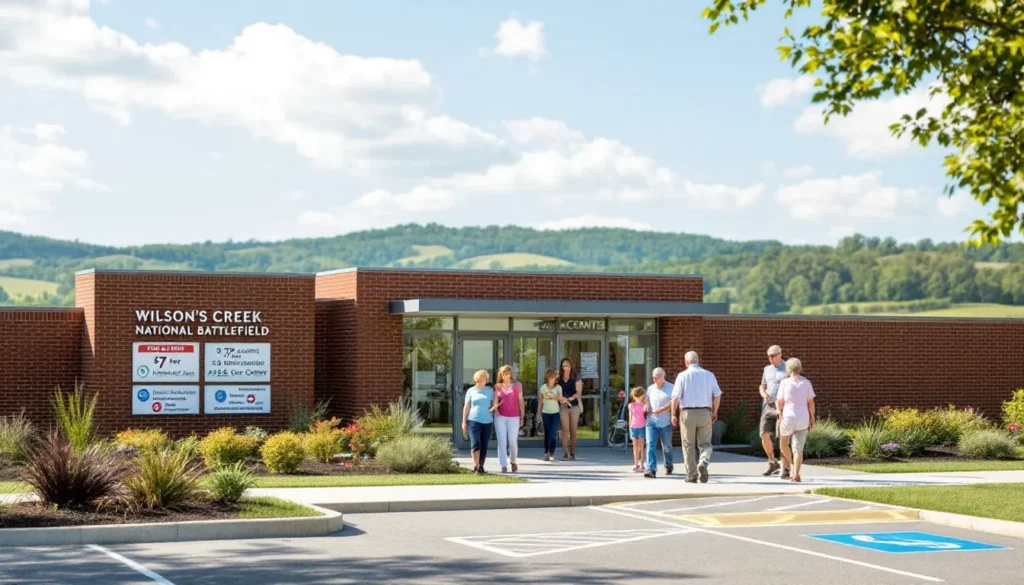
The visitor center is fully wheelchair accessible with accessible parking, restrooms, and exhibits. The Ray House has limited interior accessibility but exterior grounds are navigable. Paved walkways connect major visitor areas near the center.
But, trail accessibility varies. The Springfield Plateau Trail has sections with elevation changes and uneven surfaces unsuitable for wheelchairs. The auto loop road provides accessible viewing of battlefield positions without walking, and pull-offs accommodate vehicles. Service animals are permitted throughout the park, and visitors with accessibility concerns should discuss their needs with visitor center staff to find suitable experiences.
Accessible parking spaces are designated near the visitor center entrance. Visitors requiring specific accommodations should call ahead: (417) 732-2662.
Travel Tips and Nearby Attractions
Getting There and Parking
Wilson’s Creek National Battlefield is located approximately 10 miles south of Springfield, Missouri. From downtown Springfield, take Highway 160 south toward Republic: the park entrance is well-marked. GPS coordinates (37.4192° N, 93.4067° W) work reliably for navigation apps.
The park offers free parking in designated lots near the visitor center and at trailhead areas. Spots are plentiful except during peak summer weekends and special events. The main lot accommodates standard vehicles easily: RVs and large trailers should confirm available space by calling ahead, as some pulling areas have turning radius limitations.
Driving time from Springfield airport (SGF) is approximately 20-25 minutes, making the battlefield accessible for visitors arriving by air. From Branson, Missouri (known for tourist attractions), the drive is roughly 45 minutes north.
Lodging and Dining Options in the Area
Springfield, 10 miles north, offers extensive lodging ranging from budget motels to mid-range hotels. National chains (Holiday Inn, Best Western, Super 8) cluster near the commercial district and highway corridors. Bed-and-breakfasts in historic downtown Springfield provide alternative charm and local character.
For dining, Springfield’s downtown district and commercial zones have restaurants spanning casual chains to locally-owned establishments serving Midwestern cuisine. Since the park lacks food services, eating before or after visiting is necessary. Most visitors eat breakfast in Springfield before arriving, then lunch afterward.
Republic, Missouri (the closest small town, 5 miles from the park entrance) has limited food options but a few local diners and fast-casual chains. For a more complete dining experience, Springfield is worth the short drive.
Other nearby attractions complement a battlefield visit. The Roaring River State Park (25 minutes away) offers fishing and scenic trails. The Bass Pro Shops world headquarters in Springfield provides visitor areas and restaurant facilities. Branson (45 minutes south) features Table Rock Lake, Silver Dollar City theme park, and numerous resort attractions, good for multi-day trips combining Civil War history with vacation activities.
Hotels fill quickly during peak seasons and special events. Booking accommodation before traveling, especially for spring and fall weekends, prevents last-minute scrambling. Most lodging is concentrated in Springfield with easy highway access to the battlefield.
Conclusion
Planning a visit to Wilson’s Creek National Battlefield requires minimal advance work but benefits from informed preparation. The straightforward ticket process ($7 per vehicle, purchased on-site), year-round accessibility, and diverse attractions make the site manageable for visitors of any experience level with Civil War history.
Arrive with realistic time expectations: a quick visit combining the visitor center museum and one short trail takes 2-3 hours. Comprehensive experiences incorporating multiple trails, audio content, and ranger talks extend into 4-6 hours. Weekday mornings offer the most peaceful experience, while spring and fall provide ideal weather conditions.
Bring water, sunscreen, and comfortable shoes. Download trail maps beforehand since cell service is limited. Whether visiting as a history enthusiast, family educational trip, or casual tourist passing through Missouri, Wilson’s Creek offers genuine historical significance without the crowds or complexity of larger battlefields.
The site remains one of America’s best-preserved Civil War locations, maintained with integrity and respect for those who fought there. A day spent walking the grounds and absorbing the battle’s context provides perspective on a pivotal moment in American history, well worth the drive from Springfield and modest park admission.