
In the chaotic world of warfare, battlefield tactics can make or break a campaign. It’s not just about who has the biggest guns; it’s about strategy, cunning, and sometimes a dash of luck. Picture this: a general, armed with nothing but a map and a well-timed joke, outmaneuvering an enemy twice their size. Sounds like a plot twist straight out of a movie, right? But in reality, effective tactics are often the unsung heroes of history.
Overview of Battlefield Tactics
Battlefield tactics encompass the strategies and maneuvers used to achieve success in warfare. A variety of elements contribute to effective tactics, including terrain knowledge, troop positioning, and the element of surprise. Leaders need to adapt their approach based on the enemy’s strengths and weaknesses.
Effective communication among units plays a pivotal role in tactical success. Clear orders ensure that each soldier understands their responsibilities. Coordinated attacks, whether from infantry or armored divisions, can overwhelm an opponent and create openings for advantage.
The use of deception can alter the battlefield dynamic. Misleading the enemy about troop movements or intentions can lead to strategic breakthroughs. In many historical battles, clever misdirection has turned the tide in favor of the seemingly outmatched forces.
Utilizing technology also enhances tactical efficiency. Modern warfare employs drones for reconnaissance, artillery for precise strikes, and advanced weaponry that outmatches traditional arms. These tools allow for real-time insights into enemy positions and movements.
Mobility serves as another cornerstone of effective tactics. Armies that maintain flexibility can respond quickly to changing situations. Rapid troop relocations allow for the exploitation of weaknesses, driving home assaults when the enemy is vulnerable.
Logistics matter greatly in the context of battlefield tactics. Supply lines must remain secure to sustain operations. Disrupting an opponent’s supplies can diminish their combat effectiveness and morale.
Each of these aspects underscores the importance of planning and forethought in military operations. Historical conflicts illustrate that success hinges not solely on raw power but on the application of sound tactics tailored to the specific circumstances at hand.
Historical Evolution of Battlefield Tactics
Battlefield tactics have transformed significantly over centuries, reflecting changes in society, technology, and warfare. Understanding these shifts offers insight into military success.
Ancient Warfare Strategies
Ancient warfare relied heavily on formations and direct combat. Infantry units commonly utilized phalanxes in Greek battles, enhancing their defensive capabilities. Cavalry played a crucial role in providing mobility and covering vast territories. Strategies such as ambushes and flanking maneuvers showcased cleverness; generals often employed deception to mislead enemies. Resource availability influenced tactics as well, with easier access to supplies enabling longer campaigns. Communication among commanders established a cohesive strategy vital for coordinating troop movements.
Modern Warfare Tactics
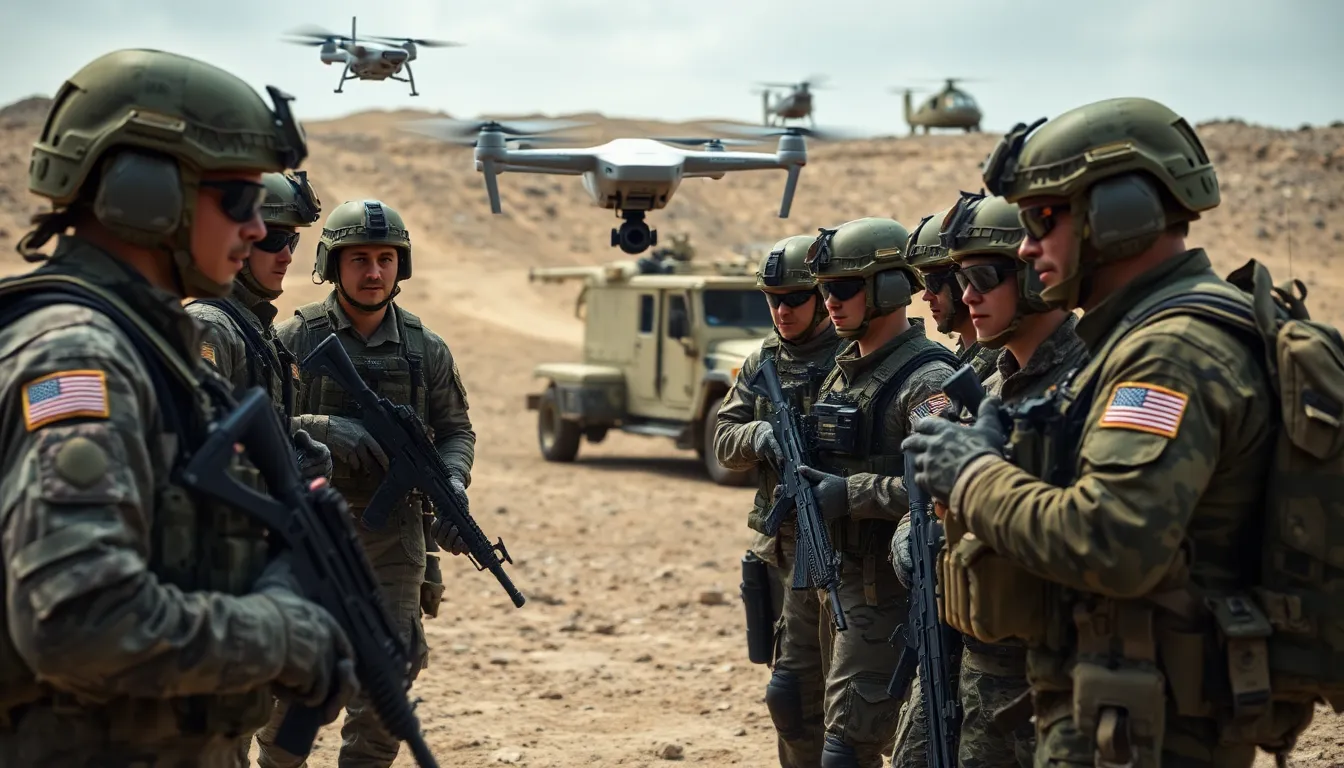
In modern warfare, technology drives tactical evolution. Armies utilize advanced weaponry, including drones that gather real-time intelligence. The emphasis on mobility ensures quick responses to dynamic battlefield situations. Cyber warfare has introduced new dimensions, disrupting enemy communications and infrastructure. Logistics remain essential; secure supply lines support sustained operations while targeting an opponent’s supplies can weaken their resolve. Coordinated joint operations now characterize military actions, allowing different branches of the armed forces to work together seamlessly for enhanced effectiveness.
Key Battlefield Tactics Today
Strategic execution of battlefield tactics shapes modern warfare. Several critical tactics have emerged.
Flanking Maneuvers
Flanking maneuvers involve positioning forces to attack an enemy’s side. This tactic exploits vulnerabilities and significantly disrupts the opponent’s line. Using speed and deception, forces can encircle their adversary, creating confusion. Historical battles showcase how successful flanking can turn the tide, as seen in the Battle of Cannae. Commanders often coordinate these movements with quick communication to maximize effectiveness and prevent enemy reinforcement.
Defensive Strategies
Defensive strategies focus on protecting territory while inflicting damage on the enemy. Troops may dig trenches or use fortified positions for enhanced security. Counter-attacks often form part of a larger defensive plan, allowing forces to regain control of lost ground. Maintaining morale and supply lines remains crucial during these engagements. Historical examples illustrate that effective defenses lead to significant victories, as seen during the Battle of Stalingrad.
Use of Technology in Tactics
Technology plays an essential role in shaping contemporary battlefield tactics. Drones provide real-time reconnaissance, enhancing situational awareness. Advanced weaponry allows for precision strikes, minimizing collateral damage while maximizing impact. Cyber capabilities introduce new dimensions, affecting communication and logistics. Employing these technologies improves coordination among branches, offering strategic advantages.
Psychological Aspects of Battlefield Tactics
Understanding the psychological elements of warfare proves crucial for achieving success. Teams can enhance their effectiveness by leveraging morale and deception as core aspects of their strategy.
Morale and Leadership
Morale significantly influences a unit’s performance during combat. High morale often results from strong leadership, which fosters trust and confidence among soldiers. Leaders inspire troops by demonstrating competence and courage, motivating them to perform under pressure. Keeping morale high encourages soldiers to take calculated risks, allowing rapid adaptation to dynamic battlefield conditions. Historical examples show that units with strong leadership have often outperformed larger forces by maintaining cohesion and driving motivation. Effective communication further reinforces this morale, ensuring everyone understands their vital roles.
Deception in Warfare
Deception serves as a powerful tool in battlefield tactics, allowing forces to mislead opponents. Innovative strategies can create advantages, often turning unfavorable situations into victories. Misdirection creates openings that opposing units may not anticipate, leading to confusion and disarray. Historical instances illustrate the effectiveness of deception, such as misleading troop movements to create false impressions of strength or vulnerability. Utilizing decoys and misinformation campaigns can distract and divert enemy attention, enabling successful attacks on weaker points. Overall, deception fosters an environment where effective tactics can flourish against even the most formidable adversaries.
Mastering battlefield tactics is essential for achieving success in warfare. It’s not merely about having superior firepower; it’s about leveraging strategy and understanding the battlefield dynamics. The adaptability of forces and their ability to communicate effectively can turn the tide in seemingly impossible situations.
As technology continues to evolve, so do the tactics employed in modern warfare. The integration of advanced tools and real-time data enhances tactical decision-making and operational efficiency. Ultimately, the most effective strategies are those that combine historical insights with innovative approaches tailored to the unique challenges of each conflict.